
Let’s discuss phased array ultrasound and applications for its use in the energy industry.
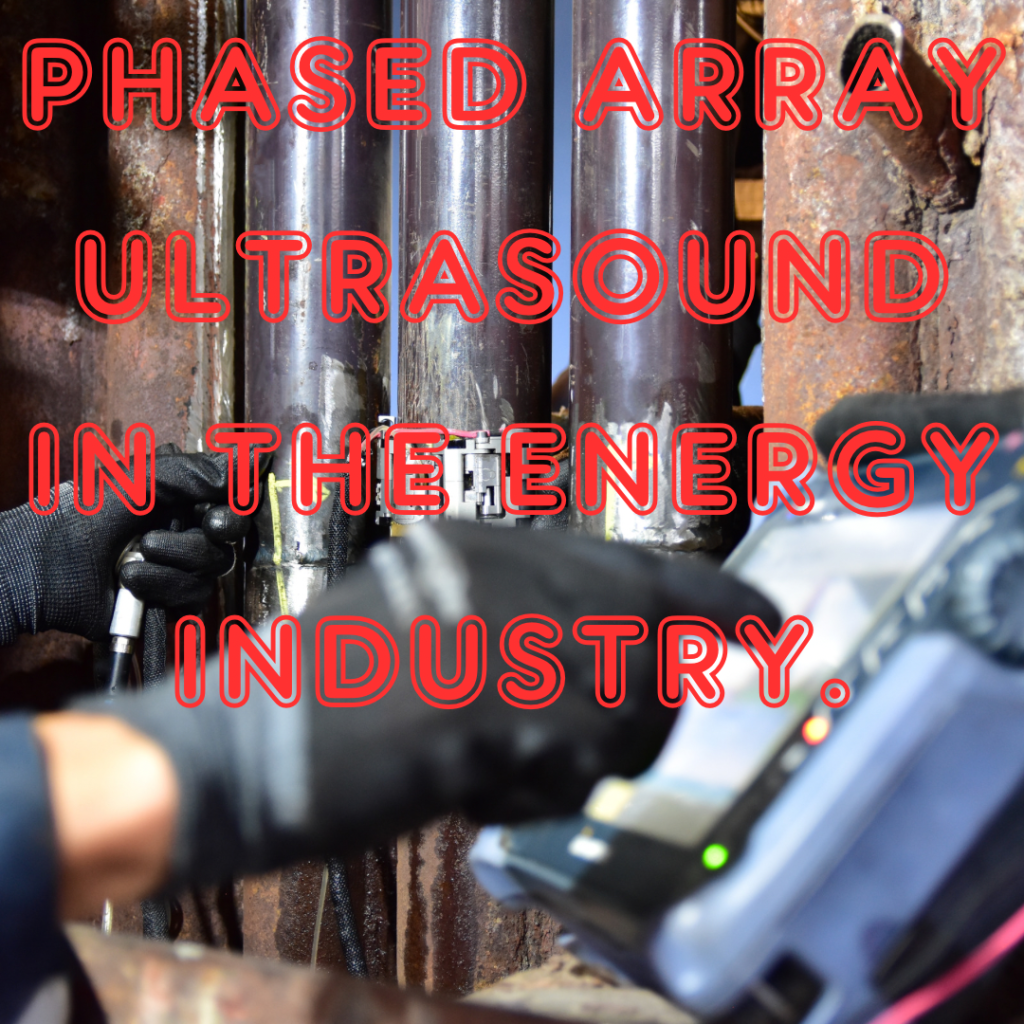
Phased array ultrasound is an advanced imaging technique that utilizes multiple transducers to create focused and steerable ultrasound beams. These beams can be electronically controlled, allowing for the adjustment of the beam direction, focus, and steering without physically moving the transducer. This technology has various applications across different industries, including the energy industry. Here are a few examples of how phased array ultrasound can be used in the energy sector:
- Non-Destructive Testing (NDT) of Pipelines: Phased array ultrasound is employed for inspecting pipelines used in the oil and gas industry. It enables accurate detection and characterization of defects such as corrosion, cracks, and weld defects. By scanning the pipe surface with multiple beams, technicians can obtain detailed images and gather important information about the condition of the pipeline, ensuring its structural integrity and preventing potential leaks or failures.
- Weld Inspection in Power Plants: Phased array ultrasound is utilized for inspecting welds in various components of power plants, including boilers, turbines, and heat exchangers. It allows inspectors to assess the quality of welds, identify any defects or discontinuities, and ensure the integrity of these critical components. This helps in preventing failures and ensuring safe and reliable operation of power plants.
- Inspection of Wind Turbine Blades: Wind energy is a growing sector, and ensuring the structural health of wind turbine blades is essential. Phased array ultrasound can be used for inspecting the internal structure of wind turbine blades. By scanning the blades with ultrasound beams, technicians can detect delaminations, internal cracks, and other defects that may affect the blade’s performance and durability. Early detection of these issues enables timely maintenance and prevents costly downtime.
- Ultrasonic Flow Measurement: Phased array ultrasound can be applied to measure the flow of fluids in pipelines, such as oil, gas, or water. By transmitting ultrasound waves through the fluid and analyzing the received signals, the velocity and volumetric flow rate of the fluid can be determined. This information is valuable for monitoring and optimizing fluid flow in various energy systems, including oil and gas pipelines and thermal power plants.
- Condition Monitoring of Power Transformers: Power transformers play a crucial role in electrical power distribution. Phased array ultrasound can be employed to assess the condition of power transformers by detecting and locating potential issues such as partial discharges, insulation degradation, and mechanical faults. Early detection of these problems allows for timely maintenance and helps prevent catastrophic failures, ensuring the reliability and longevity of power transformers.
These are just a few examples of how phased array ultrasound can be applied in the energy industry. The technology’s ability to provide detailed and accurate imaging, along with its non-destructive nature, makes it a valuable tool for inspection, monitoring, and maintenance purposes, helping to enhance safety, efficiency, and reliability in energy-related operations.
 Energy Risk Engineering Insights