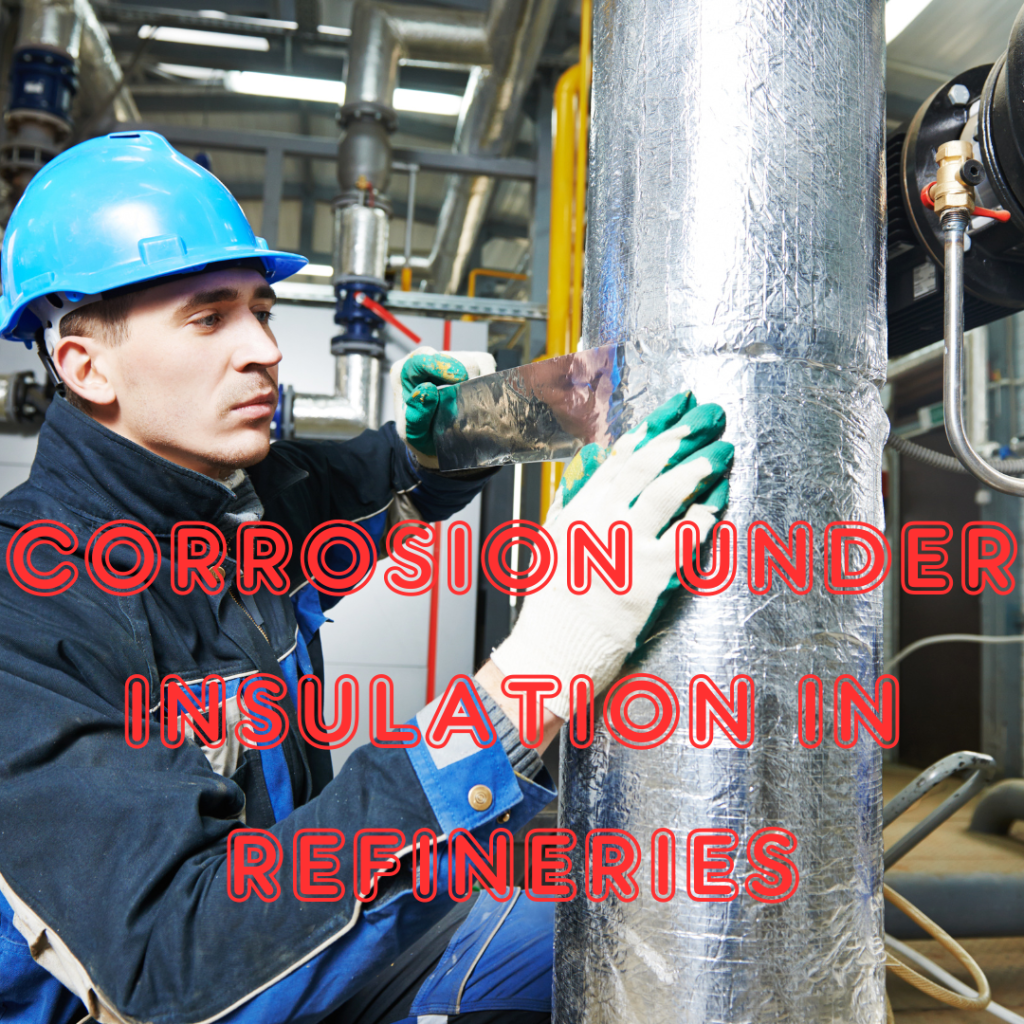

Lets discuss corrosion under insulation or CUI in refineries.
Corrosion Under Insulation (CUI) is a significant issue in refineries and other industrial facilities where piping and equipment are insulated. CUI occurs when moisture becomes trapped between the insulation and the metal surface, leading to the corrosion of the underlying material. It is a complex problem that can cause serious damage, including leaks, structural failures, and increased maintenance costs.
Several factors contribute to the development of CUI, including the presence of moisture, temperature variations, the type and condition of insulation materials, and the corrosiveness of the process environment. Moisture can enter the insulation system through various sources, such as rainwater, steam leaks, condensation, or water ingress during maintenance activities.
Once moisture is present, it becomes trapped within the insulation, creating a conducive environment for corrosion. The insulation acts as a barrier, preventing proper inspection and inhibiting the drying of the underlying metal surface. Corrosion can progress silently, leading to severe degradation of the metal before it becomes visible.
To mitigate CUI, refineries and other industrial facilities employ several preventive measures and inspection techniques. Here are some commonly used practices:
- Material Selection: Choosing corrosion-resistant materials for insulation, cladding, and metal components can reduce the susceptibility to CUI.
- Design Considerations: Proper insulation system design, including the selection of appropriate insulation materials, thickness, and weather barriers, can minimize moisture ingress and improve inspection access.
- Coatings and Protective Systems: Applying suitable coatings, corrosion inhibitors, or protective wraps to the metal surfaces can provide an additional layer of defense against moisture and corrosive elements.
- Inspection and Maintenance: Regular inspection programs, including non-destructive testing methods like ultrasonic thickness measurement, infrared thermography, and visual examinations, help detect early signs of CUI. Prompt repair or replacement of damaged insulation and corroded surfaces is crucial.
- Drainage and Ventilation: Ensuring proper drainage and ventilation systems within the insulation can help remove or prevent moisture accumulation.
- Training and Awareness: Educating personnel about CUI risks, preventive measures, and proper maintenance practices is essential to create a culture of corrosion awareness.
It is worth noting that CUI remains a challenging problem, and complete elimination is often difficult. However, by implementing a combination of preventive measures, regular inspections, and proactive maintenance, refineries can minimize the risk of CUI and extend the service life of their equipment and infrastructure.
The proportions of issues caused by moisture, temperature, process chemicals, and insulation condition can vary depending on the specific circumstances and operating conditions in a refinery. However, here is a general overview of how these factors contribute to corrosion under insulation (CUI):
- Moisture: Moisture is a primary contributor to CUI. It can enter the insulation system through various sources such as rainwater, steam leaks, condensation, or water ingress during maintenance activities. Once moisture becomes trapped, it creates a conducive environment for corrosion. The proportion of issues caused by moisture can be significant, especially if there are frequent moisture sources or inadequate insulation protection against moisture ingress.
- Temperature: Temperature variations play a role in CUI because they can cause thermal cycling and create temperature differentials between the metal surface and the insulation. These fluctuations can result in the formation of condensation and promote corrosion. Higher temperature differentials and frequent temperature cycling can increase the likelihood and severity of CUI issues.
- Process Chemicals: The corrosiveness of process chemicals can accelerate the rate of corrosion under insulation. In refineries, various corrosive substances, such as acids, salts, or acidic gases, may be present in the process environment. When these chemicals come into contact with the metal surface due to insulation degradation or breaches, they can initiate or intensify corrosion. The proportion of issues caused by process chemicals depends on the specific processes and materials used in the refinery.
- Insulation Condition: The condition of the insulation itself is also a significant factor in CUI. If the insulation becomes damaged, degraded, or compromised, it can allow moisture ingress, prevent proper inspection, or trap moisture against the metal surface. Poor insulation condition can exacerbate the effects of moisture, temperature, and process chemicals, leading to more severe CUI issues. Regular inspection and maintenance of insulation integrity are essential to minimize CUI risks.
It is important to note that the proportions of issues caused by each factor can vary from case to case. For example, in a particularly humid environment, moisture-related problems may dominate, while in an environment with aggressive process chemicals, the proportion of issues caused by chemical corrosion may be higher. Proper risk assessment, understanding of the operating conditions, and implementation of suitable preventive measures are necessary to address the specific challenges related to CUI in a refinery.
 Energy Risk Engineering Insights