
Let’s discuss why industrial compressors fail and what can be done to ensure reliability.
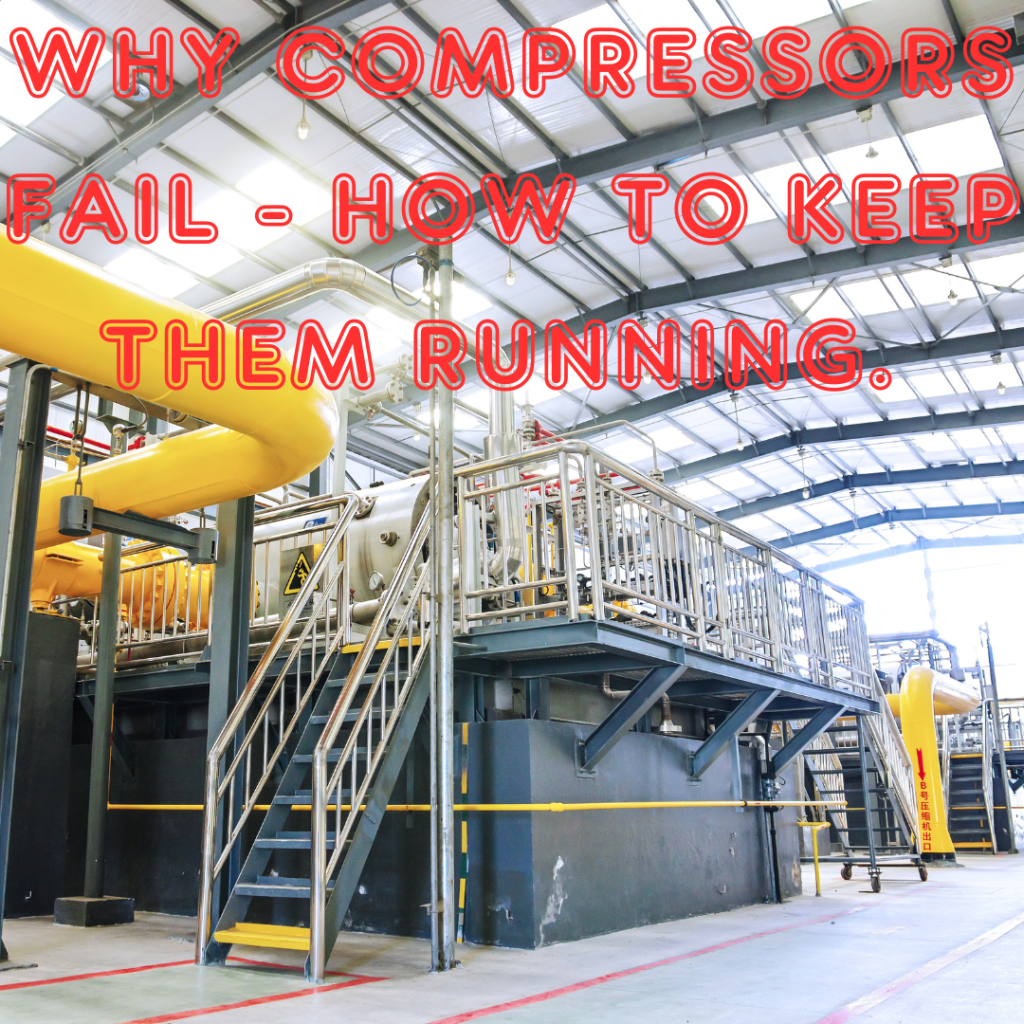
Industrial compressors can fail due to various reasons, and ensuring their reliability is crucial for the smooth operation of many industrial processes. Here are some common causes of compressor failures and steps that can be taken to enhance their reliability:
- Lack of maintenance: Inadequate or irregular maintenance is a leading cause of compressor failures. Regular inspections, lubrication, and cleaning are essential to keep the compressor in optimal condition. Establishing a comprehensive maintenance schedule and adhering to it can help prevent potential issues.
- Improper lubrication: Inadequate or improper lubrication can cause excessive wear and tear on compressor components, leading to failure. It is important to use the correct type and quantity of lubricant specified by the manufacturer and to follow the recommended lubrication schedule.
- Overheating: Compressors generate heat during operation, and excessive heat can cause various problems, such as thermal expansion, reduced efficiency, and component failure. To prevent overheating, it is crucial to ensure proper ventilation, maintain appropriate oil levels, clean heat exchangers regularly, and monitor operating temperatures.
- Contamination: Contaminants, such as dust, dirt, water, or foreign particles, can enter the compressor and damage its components. Installing appropriate filtration systems, regularly cleaning air intake filters, and ensuring proper sealing can help minimize the risk of contamination-related failures.
- Vibration and misalignment: Excessive vibration and misalignment can lead to mechanical stress, component damage, and eventually, compressor failure. Regularly inspecting and maintaining the compressor’s mounting, bearings, and couplings can help detect and address vibration and misalignment issues early on.
- Electrical problems: Electrical issues, such as voltage fluctuations, power surges, or inadequate grounding, can adversely affect compressor performance and reliability. Installing surge protection devices, ensuring stable power supply, and conducting periodic electrical system checks are essential to prevent electrical-related failures.
- Inadequate sizing or installation: Using an improperly sized compressor or incorrect installation can result in excessive strain, reduced efficiency, and premature failure. It is important to carefully assess the compressor’s requirements based on the intended application and consult with experts to ensure proper sizing and installation.
- Training and operator error: Inadequate training or operator error can lead to improper use of the compressor, potentially causing failures. Providing comprehensive training to operators and establishing clear operating procedures can help minimize the risk of errors and maximize compressor reliability.
To ensure the reliability of industrial compressors, it is crucial to implement a proactive maintenance program, monitor performance parameters regularly, and promptly address any issues that arise. Collaborating with compressor manufacturers or engaging the services of specialized maintenance providers can also provide valuable expertise and support in maintaining reliable compressor operations.
 Energy Risk Engineering Insights