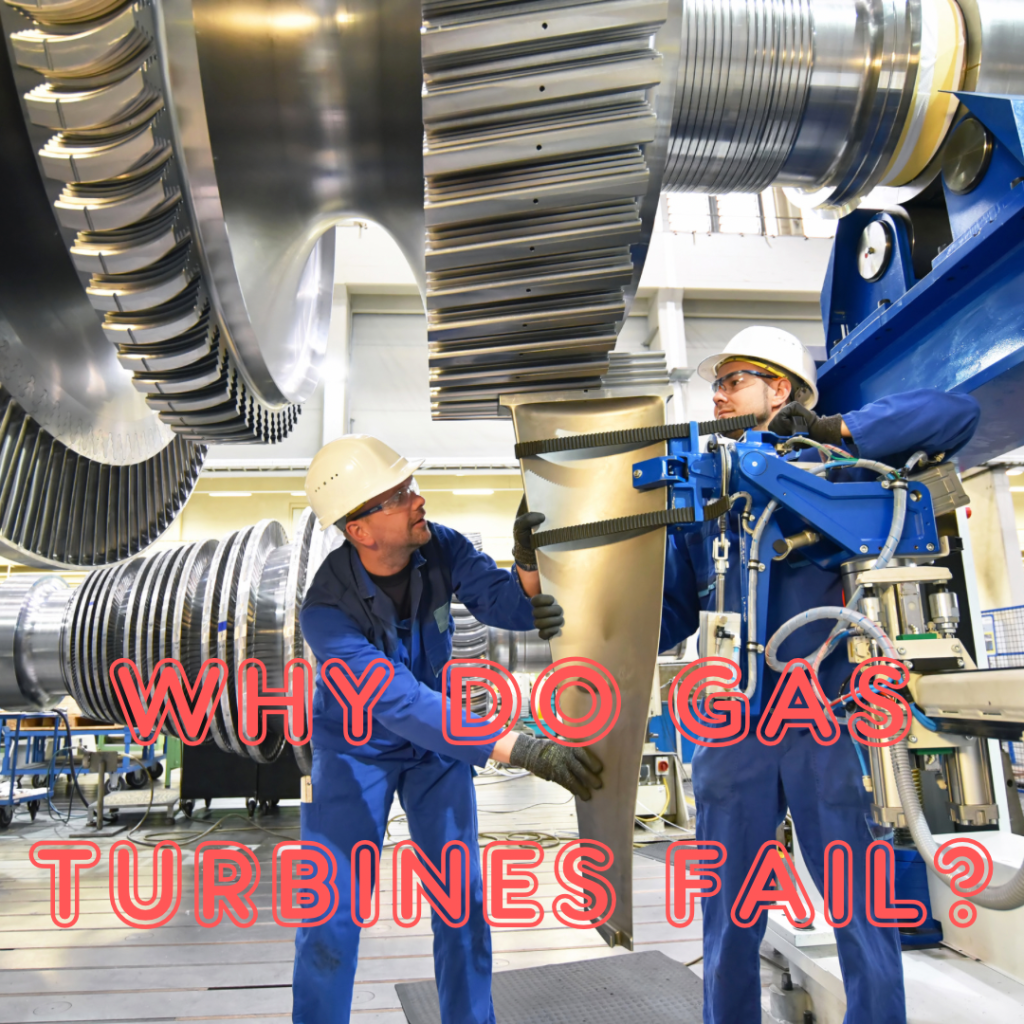
Let’s discuss why gas turbines fail.

Gas turbines can experience various types of failures due to a range of factors. Here are some common reasons why gas turbines may fail:
- Mechanical Failures: Gas turbines consist of numerous mechanical components that are subject to wear and tear over time. Failures can occur in components such as bearings, seals, gears, or blades. Fatigue, corrosion, excessive vibration, and inadequate maintenance can contribute to mechanical failures.
- Combustion Issues: The combustion process in a gas turbine is critical for its efficient operation. Problems such as flame instability, fuel quality issues, improper fuel-air mixture, or inadequate combustion chamber design can lead to combustion-related failures. These failures may result in decreased performance, increased emissions, or even catastrophic events like flameouts or explosions.
- Heat-Related Failures: Gas turbines operate at high temperatures, and the excessive heat can cause failures in components exposed to thermal stress. Thermal fatigue, creep, oxidation, and thermal expansion mismatches can lead to cracking, warping, or distortion of turbine parts. Insufficient cooling, thermal cycling, or overheating can exacerbate these issues.
- Contamination and Fouling: Gas turbines can encounter contamination from various sources, including particulate matter, dirt, dust, or chemical impurities in the fuel or air intake. The presence of contaminants can cause fouling on compressor blades, turbine vanes, or heat exchangers, reducing efficiency and potentially leading to component failure.
- Corrosion: Corrosion can affect gas turbine components, particularly those exposed to high temperatures and chemically aggressive environments. Corrosion can degrade turbine blades, vanes, combustion liners, or other metallic parts, compromising their structural integrity and performance.
- Control System Failures: Gas turbines rely on sophisticated control systems to monitor and regulate their operations. Failures in control systems can lead to improper fuel management, uncontrolled temperature or pressure excursions, or other malfunctions, which can result in reduced performance or safety hazards.
- Inadequate Maintenance: Gas turbines require regular maintenance to ensure optimal performance and reliability. Inadequate maintenance practices, such as insufficient inspections, lack of lubrication, or failure to replace worn-out components, can increase the likelihood of failures.
- External Factors: Gas turbines can be affected by external factors beyond the operator’s control, such as extreme weather conditions, natural disasters, or accidents. These events can lead to turbine failures through factors like severe vibrations, sudden load fluctuations, or physical damage.
It’s important to note that gas turbine design, manufacturing quality, operational conditions, and maintenance practices play significant roles in preventing failures. Addressing these issues through proper maintenance, monitoring, and improved design can help mitigate the risks of gas turbine failures.
 Energy Risk Engineering Insights