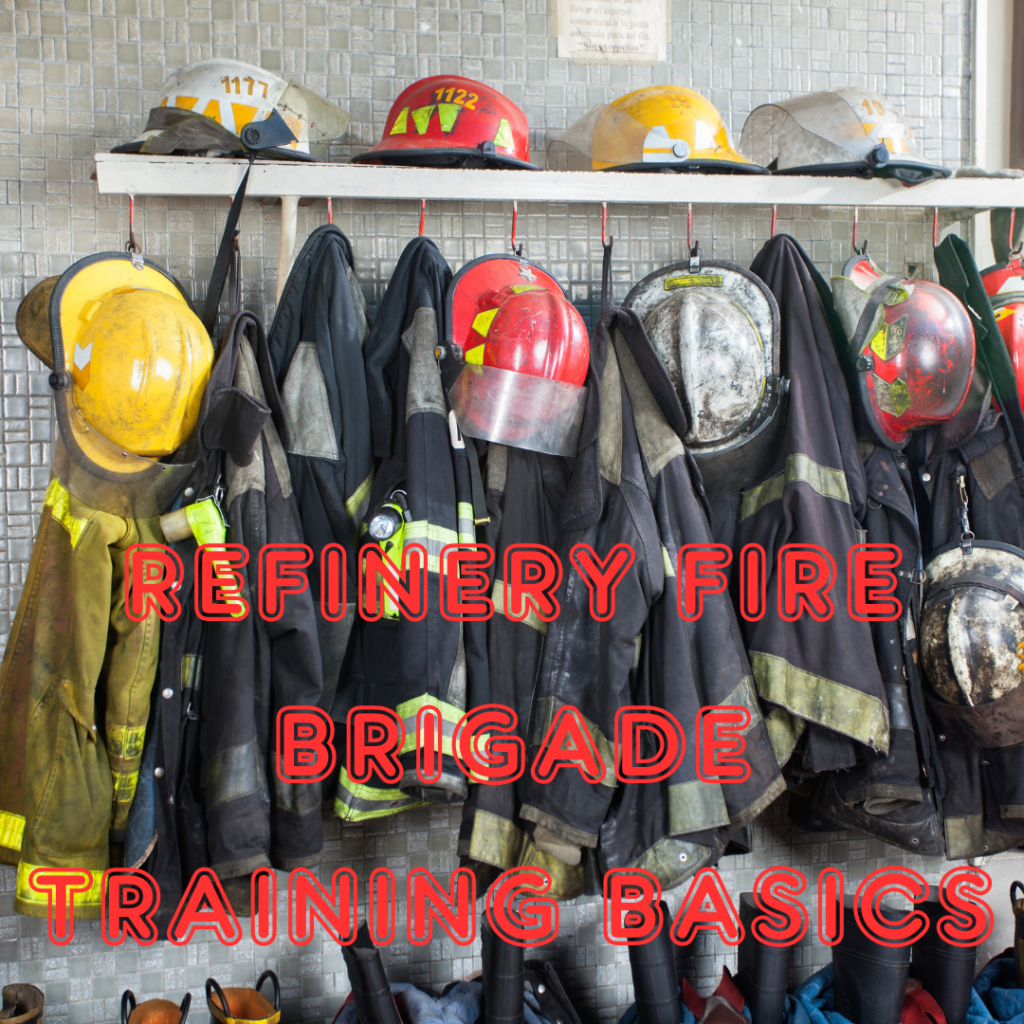
Let’s discuss a fire brigade training program for a refinery advanced exterior fire brigade.

Developing a comprehensive fire brigade training program for a refinery’s advanced exterior fire brigade is crucial for ensuring the safety and effectiveness of the team in responding to potential emergencies. Here are some key elements that could be included in such a program:
- Hazard Awareness and Prevention:
- Understanding the specific hazards present in a refinery environment, such as flammable liquids, gases, and chemicals.
- Educating the team about potential ignition sources and how to identify and mitigate fire risks.
- Training on proper handling and storage of hazardous materials to minimize the likelihood of incidents.
- Fire Behavior and Control:
- Teaching the fundamentals of fire behavior, including the different stages of fire, heat transfer, and smoke behavior.
- Providing knowledge about different types of fire extinguishing agents and their appropriate applications.
- Practicing fire suppression techniques, such as using fire hoses, foam systems, and dry chemical agents.
- Emergency Response Procedures:
- Establishing clear protocols for initiating an emergency response, including communication, incident assessment, and evacuation procedures.
- Training on the use of personal protective equipment (PPE), such as fire-resistant clothing, helmets, and breathing apparatus.
- Conducting drills and simulations to simulate real-life emergency scenarios and reinforce proper response procedures.
- Equipment Familiarization:
- Ensuring that all team members are familiar with the operation and maintenance of firefighting equipment specific to refinery environments.
- Providing training on the use of specialized tools, such as thermal imaging cameras, gas detectors, and fire suppression systems.
- Regularly inspecting and testing equipment to ensure its proper functionality.
- Team Coordination and Communication:
- Promoting effective teamwork and coordination among fire brigade members during emergency situations.
- Encouraging clear and concise communication between team members and with other emergency response personnel.
- Conducting exercises that focus on incident command systems, decision-making processes, and incident debriefing.
- Ongoing Training and Skill Development:
- Implementing regular refresher training sessions to reinforce knowledge and skills.
- Staying updated with the latest industry standards, best practices, and technological advancements in fire suppression and emergency response.
- Encouraging participation in external training programs, workshops, and conferences to enhance professional development.
- Health and Safety:
- Educating firefighters on the importance of physical fitness and maintaining a healthy lifestyle.
- Providing training on first aid, CPR, and other medical emergency response techniques.
- Incorporating safety protocols to prevent injuries, such as proper lifting techniques, ergonomics, and heat stress management.
Remember that this is just a general framework, and it’s important to tailor the training program to the specific needs and requirements of the refinery and the fire brigade. Regular evaluation and revision of the program based on lessons learned from real incidents and industry developments is also crucial to ensuring its effectiveness over time.
 Energy Risk Engineering Insights