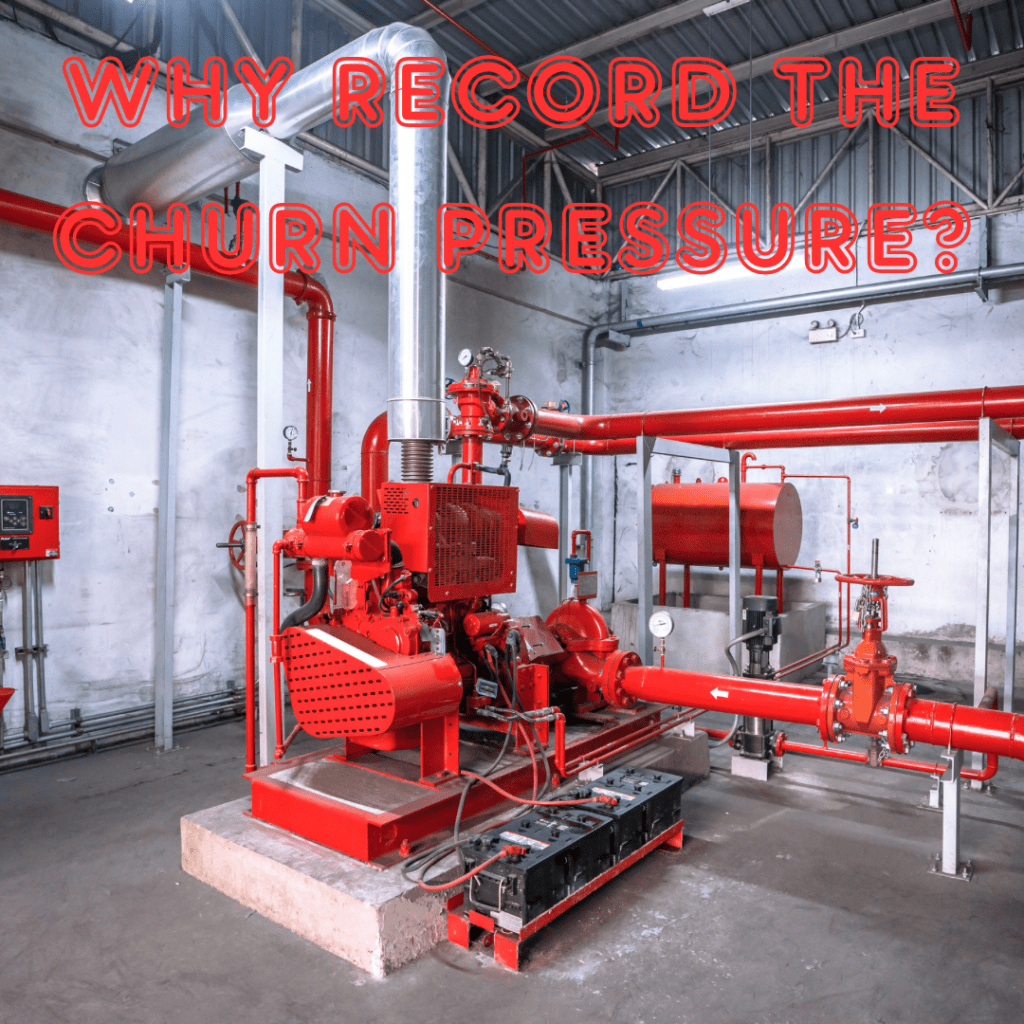
When performing a fire pump test why is the churn pressure recorded?

During a fire pump test, the churn pressure is recorded to verify the pump’s performance and ensure its readiness to supply water in case of a fire emergency. Churn pressure refers to the pressure that is generated when the pump operates with no water flowing through it, commonly known as the “no-flow” condition.
Here are the reasons why churn pressure is recorded during a fire pump test:
- Pump Health Assessment: Measuring the churn pressure helps evaluate the overall health and functionality of the fire pump. By running the pump without water flow, it allows technicians to check for issues such as leaks, excessive vibrations, abnormal noise, or other mechanical problems that could affect the pump’s performance.
- Pressure Relief Valve Verification: The churn pressure is particularly useful for testing the pressure relief valve, which is an important safety feature of the fire pump system. The relief valve is designed to limit the maximum pressure produced by the pump to prevent damage to the system. By observing the churn pressure, technicians can verify that the relief valve is functioning correctly and releasing excess pressure when needed.
- System Integrity Check: The churn pressure test helps identify any obstructions or restrictions in the fire pump system. It ensures that the pipes, valves, and other components are properly sized, installed, and in good condition. If the churn pressure is lower than expected, it could indicate issues such as clogged pipes or closed valves, which need to be addressed to ensure adequate water flow during a fire event.
- Performance Baseline: Recording churn pressure establishes a baseline measurement for future comparisons. By noting the churn pressure during the initial pump test, it becomes a reference point against which future pump tests can be compared. Any significant deviations from the baseline churn pressure in subsequent tests may indicate changes or degradation in the pump’s performance over time, prompting further investigation and maintenance.
In summary, recording churn pressure during a fire pump test allows for the assessment of the pump’s health, verification of the pressure relief valve, checking system integrity, and establishing a performance baseline. These measures help ensure the fire pump is in optimal condition and capable of delivering water effectively in the event of a fire emergency.
 Energy Risk Engineering Insights