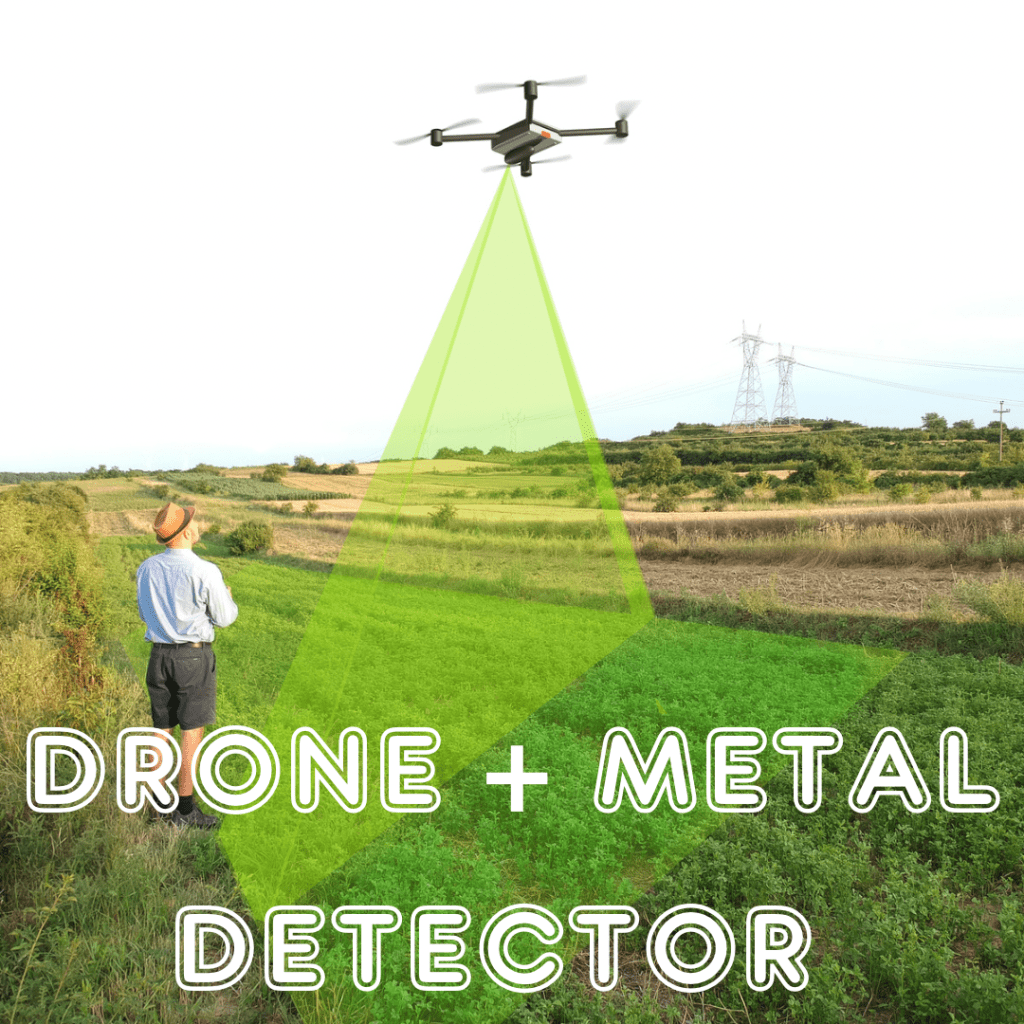
Let’s discuss a drone metal detector.

A drone metal detector is an interesting concept that combines the capabilities of a drone and a metal detector. It essentially involves attaching a metal detector to a drone to create a mobile, aerial metal detection system. The drone can then fly over areas of interest to locate buried or hidden metal objects.
Here are some points to consider when discussing a drone metal detector:
- Mobility and Versatility: One of the significant advantages of using a drone for metal detection is its mobility. Drones can easily navigate over various terrains, including rugged or hard-to-reach areas, which may be challenging for humans or ground-based metal detectors to access. The ability to cover large areas quickly makes drone metal detectors suitable for applications such as archaeological surveys, disaster response, or search and rescue operations.
- Efficiency and Time-saving: Drones equipped with metal detectors can potentially save significant time and effort compared to traditional metal detection methods. By flying over an area, the drone can quickly scan and identify metal objects buried underground, eliminating the need for manual, time-consuming searches. This can be particularly useful in scenarios where time is critical, such as in emergency situations or large-scale construction projects.
- Sensor Technology: The effectiveness of a drone metal detector relies on the quality and sensitivity of the metal detection sensor. The sensor should be capable of detecting a wide range of metals accurately, while also filtering out false positives or interference from other sources. Advanced sensor technologies, such as electromagnetic induction or pulse induction, are commonly used in metal detectors and could be integrated into a drone metal detection system.
- Data Acquisition and Analysis: A drone metal detector can generate a vast amount of data during its flights, including information about the location, depth, and size of detected metal objects. Efficient data acquisition and analysis techniques are necessary to process and interpret this data effectively. Machine learning algorithms and computer vision techniques can play a crucial role in automating the detection and classification of metal objects based on the collected data.
- Limitations and Challenges: While a drone metal detector offers numerous benefits, it also has some limitations and challenges. Flight time is a crucial consideration, as drones typically have limited battery life. The weight and size of the metal detector system may affect the drone’s payload capacity and flight stability. Environmental factors such as wind, rain, or electromagnetic interference can also impact the accuracy and reliability of metal detection.
- Legal and Ethical Considerations: The use of drones for metal detection may be subject to local regulations, especially if used in public or private areas. Privacy concerns should also be taken into account when deploying drone metal detectors, as they may inadvertently capture sensitive information or violate individuals’ privacy rights.
 Energy Risk Engineering Insights