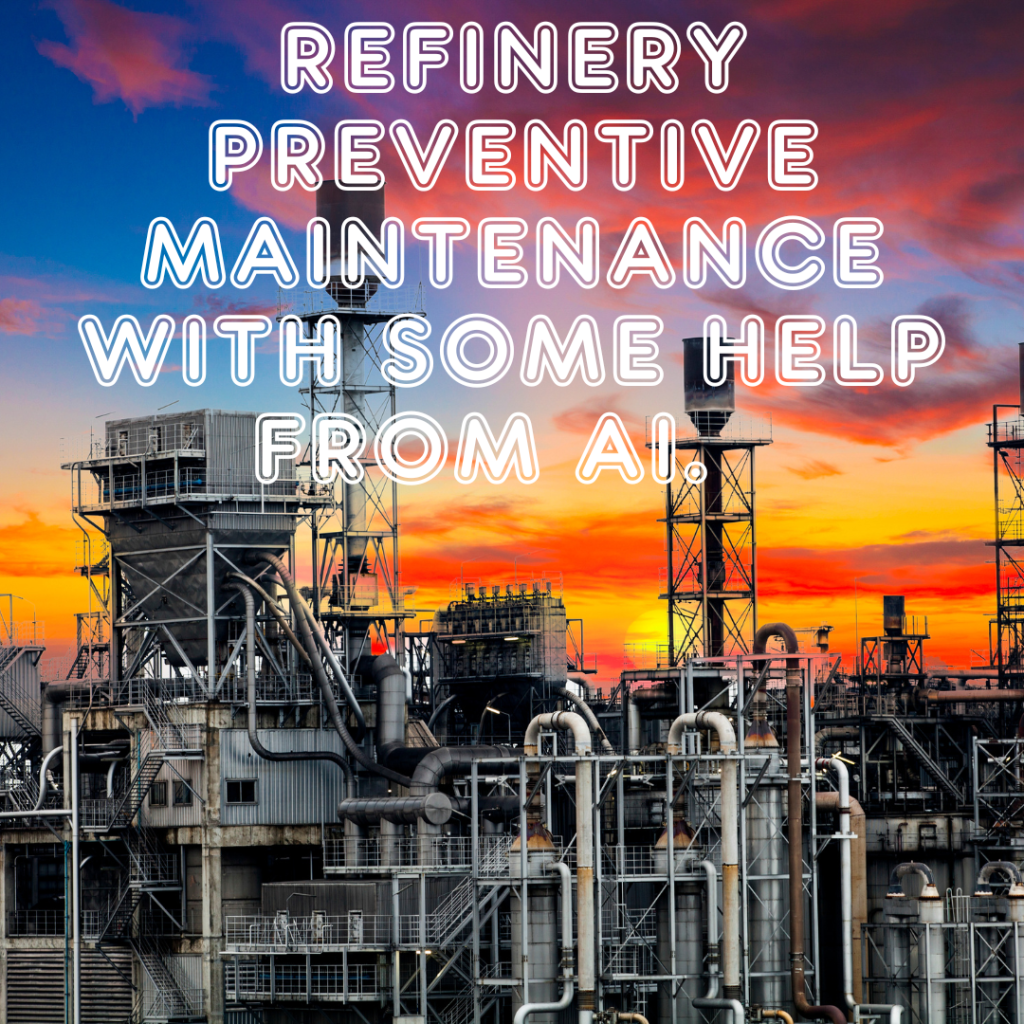
Let’s discuss preventive versus predictive maintenance in petrochemical and power plants and how AI can be used to improve maintenance in these facilities.

AI technologies have the potential to greatly enhance maintenance practices in petrochemical and power plants by enabling more accurate and efficient preventive and predictive maintenance approaches. Let’s delve into the benefits and applications of AI in these facilities:
- Preventive Maintenance with AI: AI can improve preventive maintenance practices by optimizing maintenance schedules and reducing unnecessary maintenance tasks. Here’s how AI can be applied:
a. Equipment Monitoring and Diagnostics: AI-powered systems can continuously monitor equipment performance and collect data from sensors, gauges, and other sources. Machine learning algorithms can analyze this data to detect patterns, identify anomalies, and predict potential failures, allowing maintenance teams to take proactive actions.
b. Condition-Based Maintenance: AI algorithms can utilize real-time equipment data to determine the actual condition of assets. By considering factors like operating parameters, environmental conditions, and historical performance, AI systems can optimize maintenance schedules based on the condition of each individual asset, reducing over-maintenance and maximizing equipment availability.
c. Failure Pattern Recognition: AI can identify failure patterns across similar equipment and components by analyzing historical maintenance and performance data. This knowledge can be leveraged to improve maintenance strategies and enhance the effectiveness of preventive measures.
- Predictive Maintenance with AI: AI plays a crucial role in predictive maintenance, enabling more accurate and timely identification of potential failures. Here are some AI applications in this domain:
a. Machine Learning for Predictive Analytics: Machine learning algorithms can analyze vast amounts of historical data to identify patterns and correlations between equipment conditions and failures. This enables the development of predictive models that forecast the likelihood of future failures and recommend appropriate maintenance actions.
b. Real-Time Equipment Monitoring: AI can integrate with sensor networks and IoT devices to monitor equipment in real-time. By continuously analyzing sensor data, AI systems can detect early signs of degradation, abnormalities, or performance deviations, alerting maintenance teams to take preventive measures promptly.
c. Prescriptive Maintenance Recommendations: AI can not only predict potential failures but also provide recommendations on the most effective maintenance actions to be taken. These recommendations can consider factors such as the severity of the predicted failure, the criticality of the equipment, availability of spare parts, and other operational constraints.
d. Optimization of Maintenance Resources: AI algorithms can optimize the allocation of maintenance resources, including personnel, spare parts, and tools, based on predicted maintenance needs. This helps ensure that the right resources are available at the right time and minimize downtime caused by maintenance activities.
Overall, AI technologies empower petrochemical and power plants to move beyond traditional maintenance approaches, enabling them to adopt more proactive, data-driven, and cost-effective preventive and predictive maintenance strategies. By harnessing the power of AI, these facilities can optimize equipment performance, reduce unplanned downtime, and enhance safety and reliability.
 Energy Risk Engineering Insights