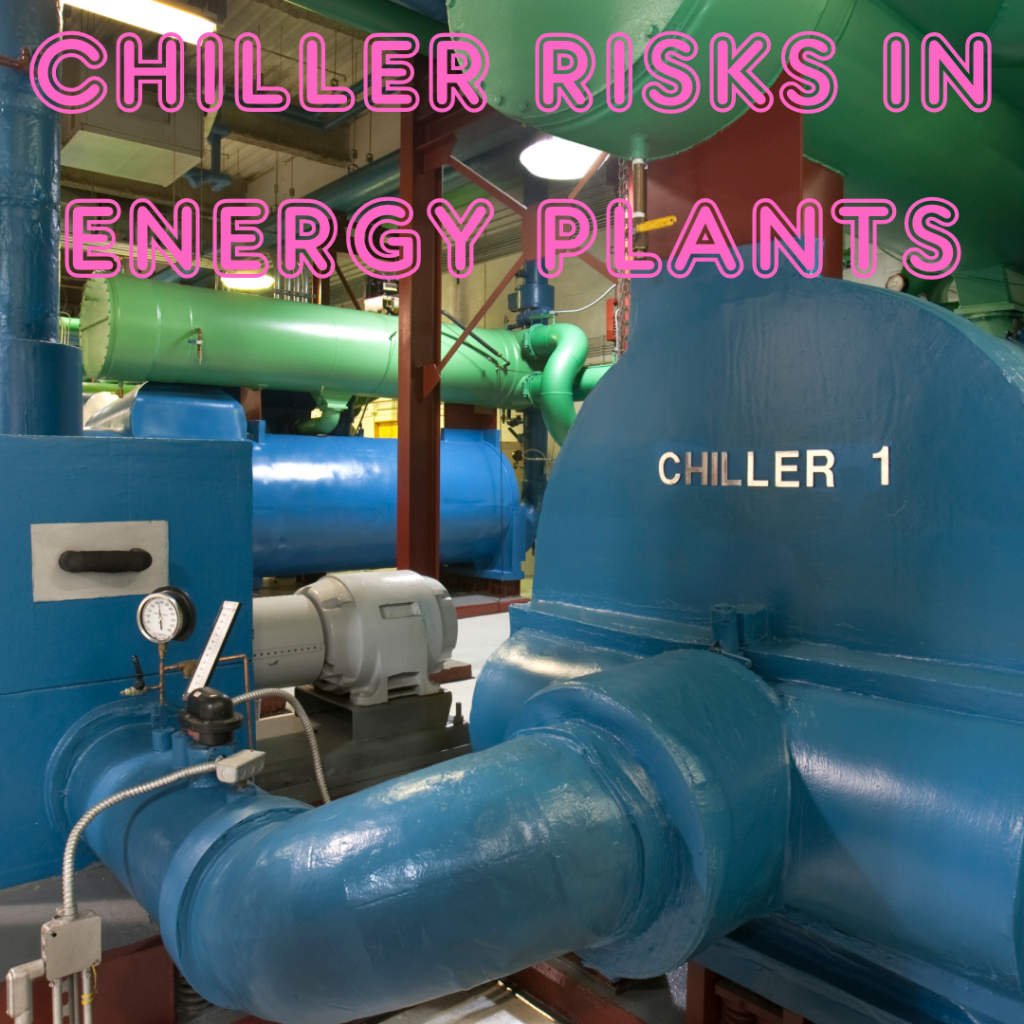
Let’s discuss chiller risks in chemical process facilities.

Chillers play a critical role in maintaining the desired temperature conditions in chemical process facilities. While they are essential for the smooth operation of these facilities, they do pose certain risks that need to be considered and managed. Here are some key risks associated with chillers in chemical process facilities:
- Equipment Failure: Chillers are complex systems with various components such as compressors, condensers, and evaporators. Any failure in these components can lead to a shutdown or disruption in the cooling process, resulting in process inefficiencies, production delays, or even equipment damage. Regular maintenance, inspection, and monitoring are necessary to minimize the risk of equipment failure.
- Refrigerant Leaks: Chillers use refrigerants to cool the process fluids or equipment. Refrigerant leaks can occur due to corrosion, mechanical damage, or faulty connections. Refrigerants can be hazardous to human health and the environment, especially if they are released in large quantities. Proper handling, leak detection systems, and prompt repair of leaks are important to prevent any health and environmental risks.
- Fire Hazards: Chillers typically use electrical components, motors, and compressors, which can be potential ignition sources. Electrical malfunctions or overheating can lead to fire hazards. Implementing appropriate electrical safety measures, such as regular inspections, proper grounding, and using explosion-proof equipment, can help mitigate the risk of fires.
- Water Contamination: Chillers rely on water as a cooling medium, and any contamination of the water supply can affect their performance and lead to equipment damage. Factors like microbial growth, scale formation, or chemical contamination can compromise the chiller’s efficiency and increase the risk of corrosion. Regular water treatment, monitoring, and cleaning protocols should be in place to minimize water-related risks.
- Overcooling or Undercooling: Improper temperature control can have significant consequences in chemical process facilities. Overcooling or undercooling can negatively impact the quality of the product, alter reaction rates, or compromise the integrity of the process. Proper calibration and maintenance of temperature control systems are essential to ensure accurate and reliable cooling performance.
- Energy Consumption: Chillers are energy-intensive systems, and inefficient operation can result in high energy consumption and associated costs. Inadequate maintenance, improper sizing, or lack of optimization can lead to excessive energy usage. Regular energy audits, system optimization, and monitoring can help identify and address energy inefficiencies, reducing operational costs and environmental impact.
To mitigate these risks, it is crucial to have a comprehensive chiller maintenance program in place, which includes routine inspections, preventive maintenance, and adherence to safety guidelines. Additionally, implementing safety protocols, training employees on proper chiller operation, and conducting risk assessments can contribute to a safer working environment in chemical process facilities.
 Energy Risk Engineering Insights