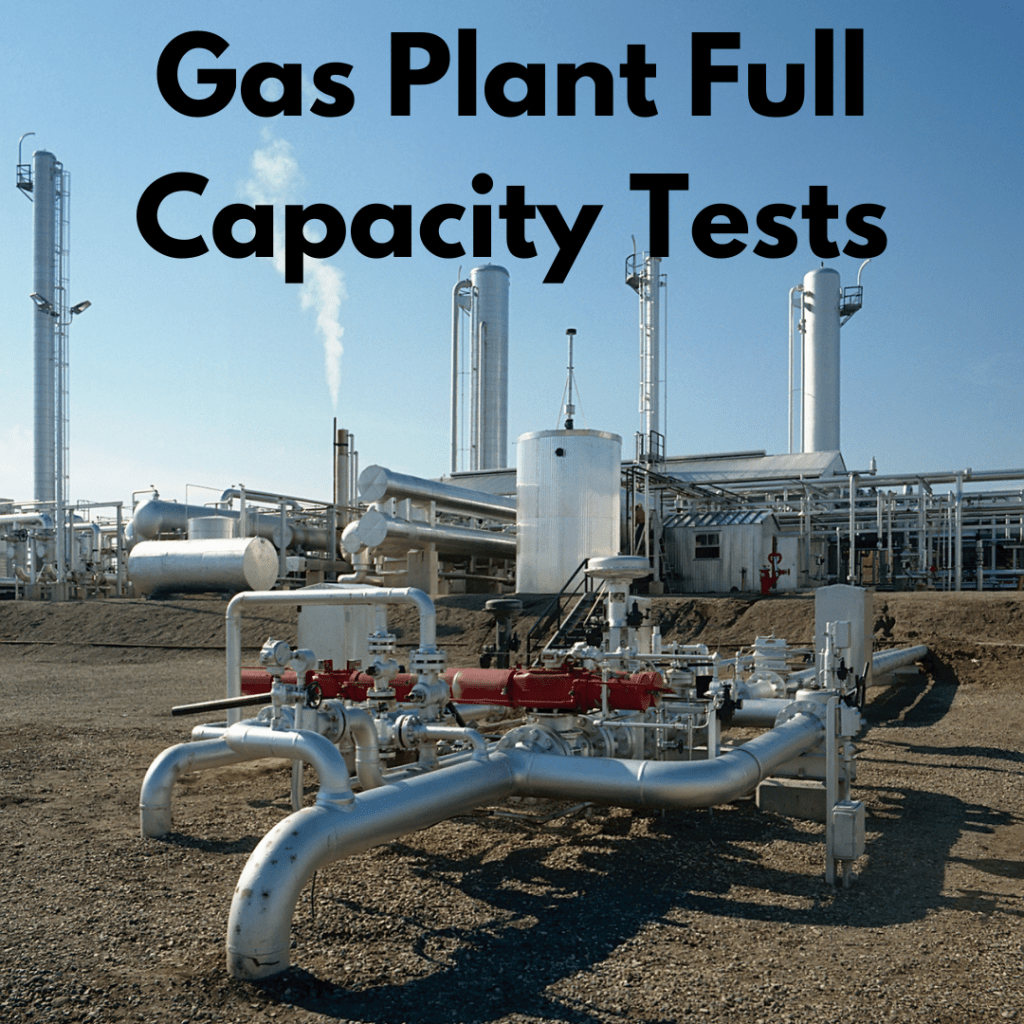
In an ideal world, every new gas processing facility would undergo a comprehensive 72-hour performance test at 100% design capacity before final acceptance. However, as risk engineers, we frequently encounter situations where available feed gas volumes don’t match the facility’s designed future capacity. This creates unique challenges in verifying plant performance and managing project risk.
The Traditional Approach
The standard 72-hour performance test serves multiple critical functions:
- Validates equipment performance under full load
- Confirms control system stability
- Verifies safety systems and emergency responses
- Demonstrates achievement of guaranteed performance metrics
- Establishes baseline operational parameters
The Real-World Challenge
Many new facilities are designed for future capacity that won’t be available for several years. Consider a common scenario: a plant designed for 100 MMCFD that will initially only receive 60 MMCFD as upstream development progresses. This creates a significant risk management challenge: how do we verify performance without full feed gas availability?
Risk-Based Solutions
1. Modified Testing Protocols
The most robust approach is implementing a two-phase testing strategy:
- Initial testing at available capacity (e.g., 60%)
- Future testing when full feed gas becomes available
This requires careful consideration of:
- Proportional acceptance criteria
- Clear triggers for future testing
- Interim performance guarantees
- Documentation requirements
2. Technical Mitigations
Several engineering solutions can help validate performance:
- Individual equipment testing at maximum capacity
- Temporary gas recycle loops
- Nitrogen circulation testing
- Rental compression for testing periods
- Design optimization for turndown operation
3. Contractual Framework
Success depends on clear contractual structures:
- Defined interim and final acceptance criteria
- Appropriate holdback mechanisms
- Trigger conditions for full-capacity testing
- Performance guarantee adjustments
- Payment milestone restructuring
Risk Engineering Recommendations
- Early Planning: Address testing limitations during project planning phase
- Documentation: Establish comprehensive baseline performance data
- Third-Party Verification: Include independent validation of test methods
- Clear Communication: Ensure all stakeholders understand testing limitations
- Future Proofing: Document untested conditions for future reference
Looking Forward
As the energy industry continues to evolve, we must adapt our approach to performance testing. The traditional 72-hour test remains the gold standard, but pragmatic alternatives that maintain rigorous verification while acknowledging real-world constraints are increasingly necessary.
Risk engineers play a crucial role in developing and implementing these modified testing protocols. By combining technical expertise with practical risk management strategies, we can ensure new facilities meet performance requirements while acknowledging the realities of phased development.
Remember: perfect shouldn’t be the enemy of good. A well-designed partial capacity test program can provide the necessary assurance while maintaining project viability.
This article provides general guidance for risk engineering professionals. Specific testing protocols should be developed based on individual project requirements and regulatory frameworks.
 Energy Risk Engineering Insights